
MOTS-C
FOR NON-CLINICAL LABORATORY RESEARCH USE ONLY
This product is sold exclusively to approved business and institutional purchasers for lawful laboratory research or analytical use. It is not intended for human or animal consumption, ingestion, inhalation, injection, topical application, or other administration.
Read full use restrictions
This product must not be used for medical, therapeutic, diagnostic, prophylactic, clinical, veterinary, compounding, food, animal-feed, dietary-supplement, cosmetic, household, recreational, or personal purposes. It may not be resold or otherwise distributed to individual consumers.
Purchasers must review the product label, Certificate of Analysis, and applicable Safety Data Sheet and maintain appropriately trained personnel, facilities, storage, handling, transportation, and disposal procedures.
From $70.00
Description
Compound Specifications
| Full name | Mitochondrial ORF of the 12S rRNA type-c |
| Compound class | Mitochondrial-derived peptide (MDP) |
| Sequence | Met-Arg-Trp-Gln-Glu-Met-Gly-Tyr-Ile-Phe-Tyr-Pro-Arg-Lys-Leu-Arg |
| Single-letter sequence | MRWQEMGYIFYPRKLR |
| Amino acid count | 16 |
| Encoded by | Mitochondrial DNA (12S rRNA region) |
| Molecular weight | 2174.6 g/mol |
| CAS number | 1627580-64-6 |
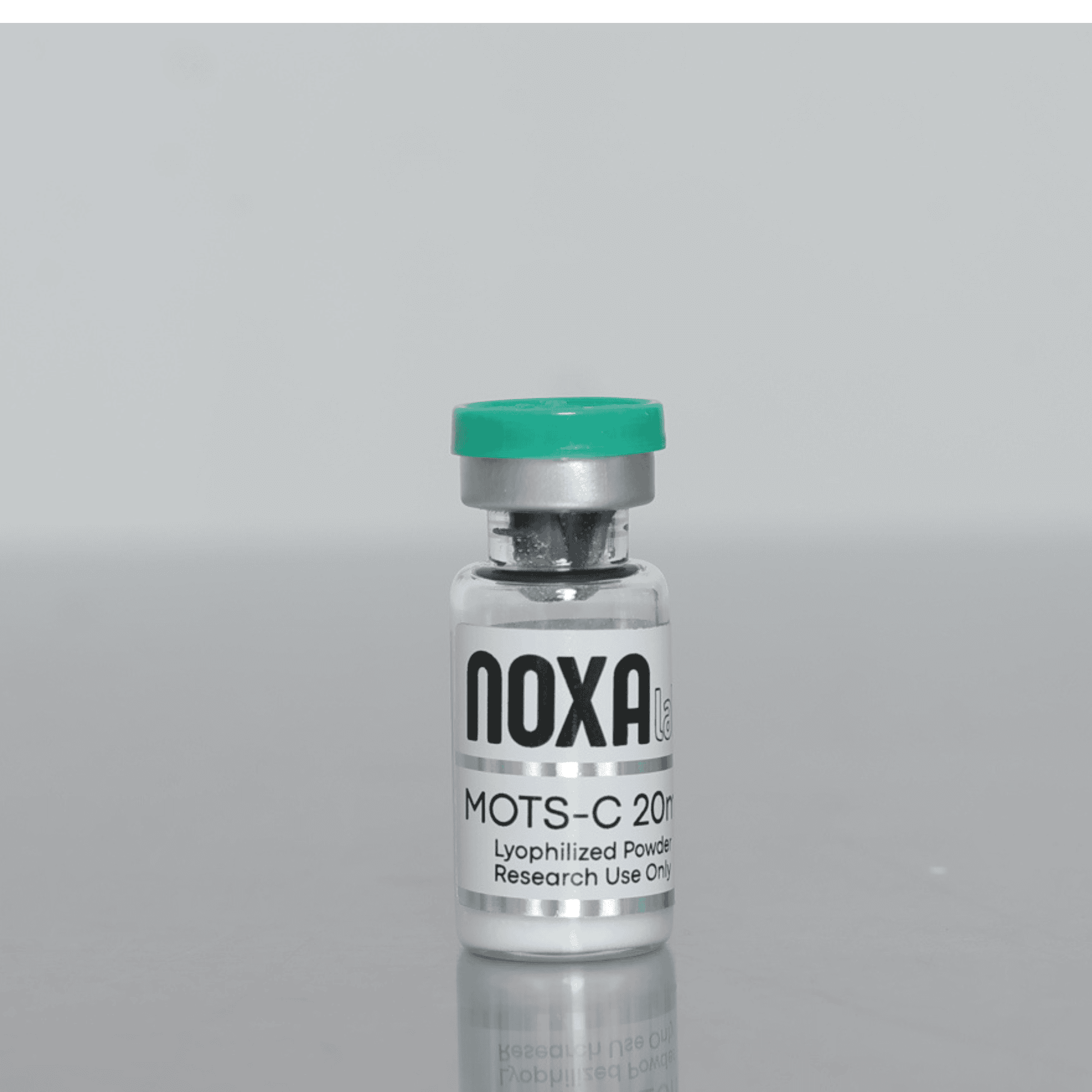
| Form | Lyophilized powder |
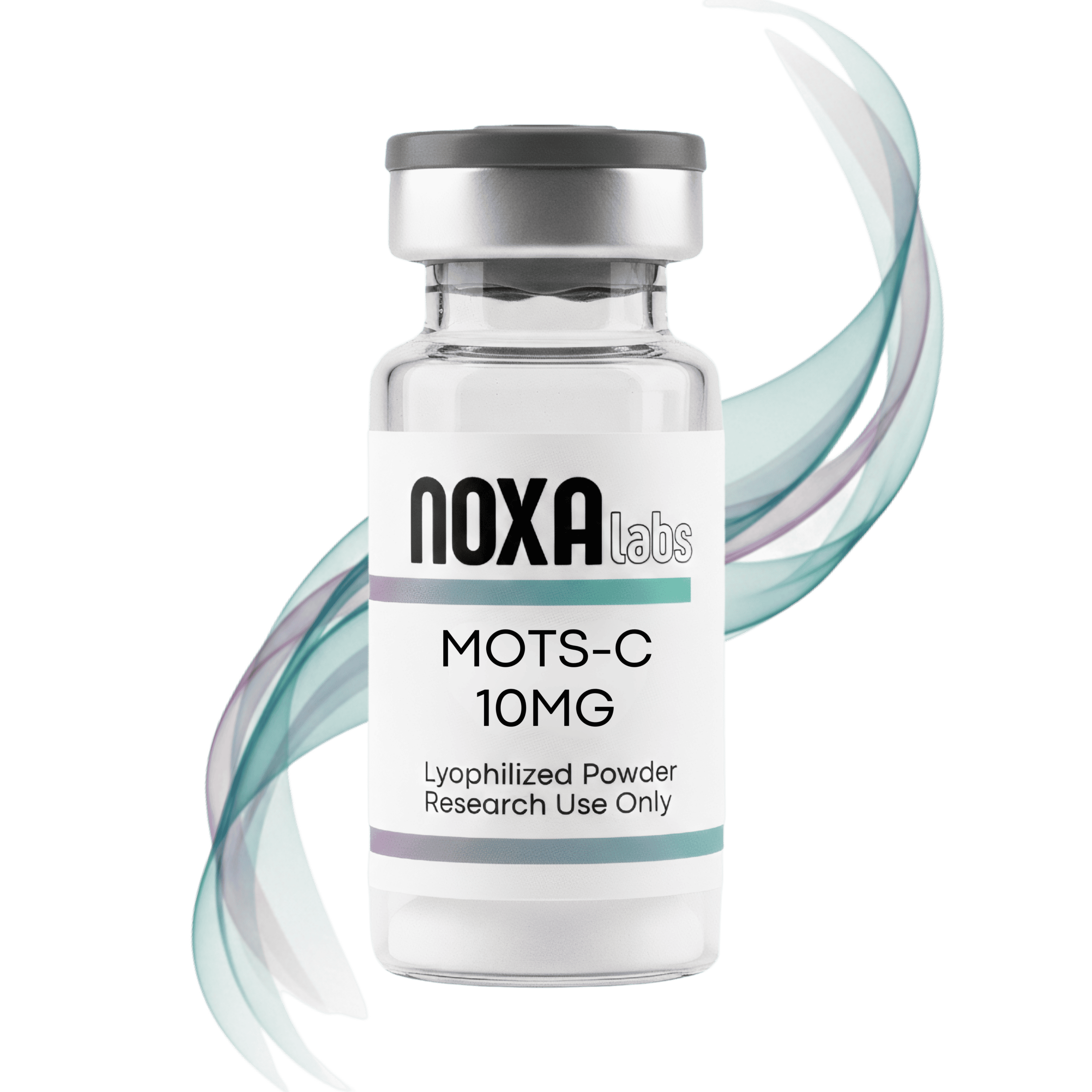
| Available quantities | 10mg, 20mg, 40mg per vial |
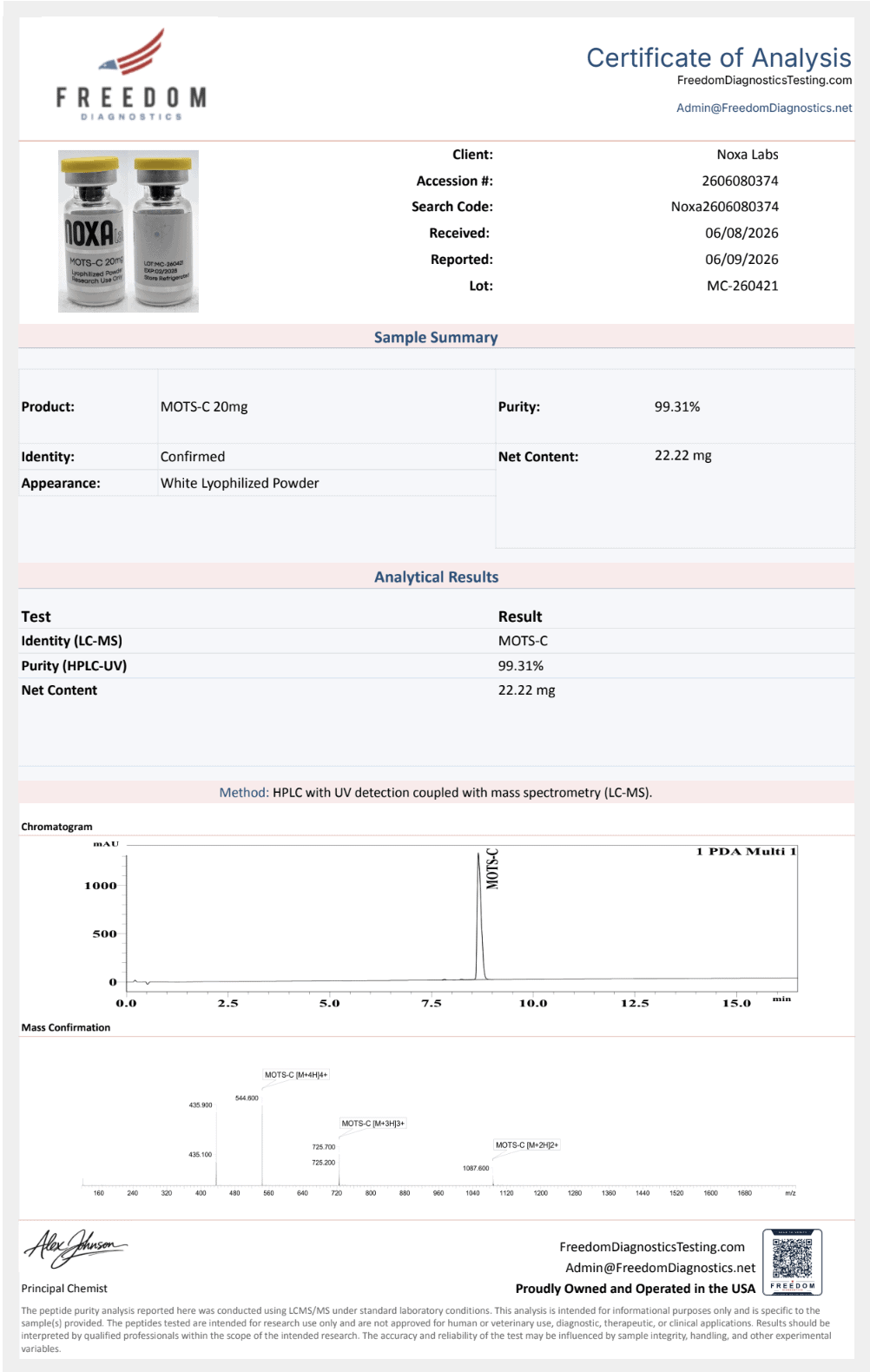
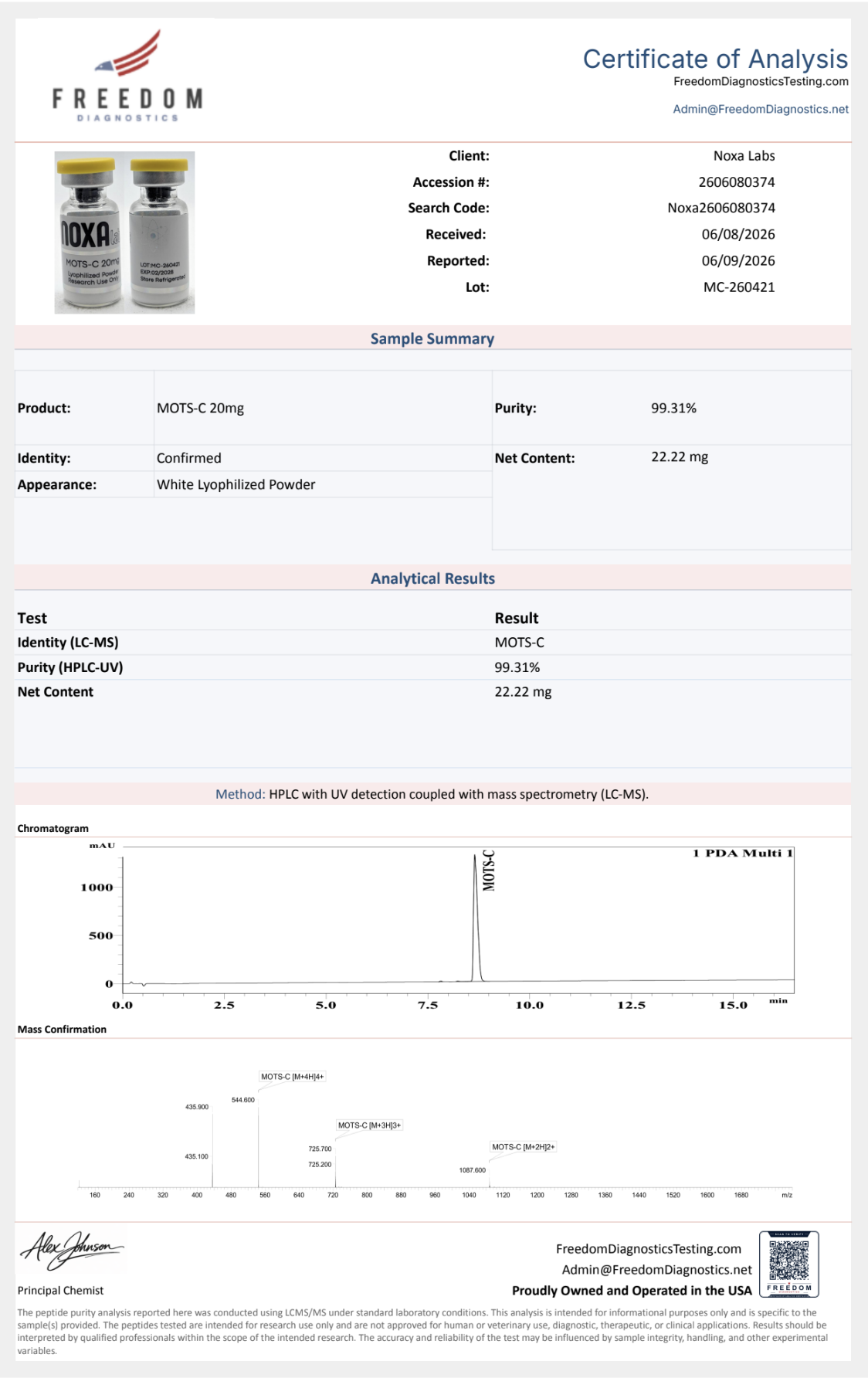
| Purity | ≥99% (HPLC verified) |
| Endotoxin testing | Performed per batch |
| Storage (lyophilized) | 2–8°C, protected from light |
| Long-term storage | -20°C |
| Third-party testing | Freedom Diagnostics |
| Manufacturing | Arizona GMP facility, USA |
Research Background
Every other peptide in the Noxa Labs catalog originates, directly or by analogy, from a sequence encoded in nuclear DNA. MOTS-C does not. It is transcribed from an open reading frame within the mitochondrial 12S ribosomal RNA gene — part of the small circular genome that mitochondria carry independently of the cell nucleus.
That distinction is the reason the compound is studied at all. Mitochondrial DNA is compact, encoding only a handful of genes, and for most of the history of the field it was assumed to encode nothing beyond components of the respiratory chain and the machinery to translate them. The identification of short peptides encoded within mitochondrial rRNA genes — the mitochondrial-derived peptide class, of which MOTS-C is the most studied member — represented a revision of that assumption.
The 16-residue sequence contains two methionine residues and a notably aromatic core, with tryptophan, tyrosine and phenylalanine clustered through the central region. The aromatic content has practical consequences for handling: it contributes to the peptide’s UV absorbance profile, which makes concentration determination by spectrophotometry more straightforward than for sequences lacking aromatic residues, and it increases sensitivity to light exposure.
MOTS-C is described in the literature as a signaling peptide, and research interest centres on the concept of retrograde signaling — communication originating in the mitochondrion and directed outward to the rest of the cell, rather than the conventional direction of nuclear control over mitochondrial function.
All statements above describe molecular characteristics and published research contexts. Noxa Labs makes no claim regarding safety, efficacy, or outcomes of any kind, in humans or animals.
Handling & Storage
Lyophilized MOTS-C is stable at 2–8°C when sealed and shielded from light. For storage beyond several months, -20°C is preferred. Avoid repeated freeze-thaw cycles.
Light protection matters more for this compound. The aromatic residues — particularly tryptophan — are photosensitive, and the two methionine residues are susceptible to oxidation. Keep vials in amber containers or wrapped, minimize bench time under direct light,.
Purity & Testing
Every batch is synthesized at our GMP-compliant Arizona facility and independently analyzed by Freedom Diagnostics before release. We publish HPLC purity data and endotoxin testing results — we don’t ask you to take our word for it. Certificates of Analysis are available for any lot; contact us with your order number.
View all Certificates of Analysis →
Frequently Asked Questions
What does MOTS-C stand for?
Mitochondrial open reading frame of the 12S rRNA type-c.
What makes it different from the other peptides in this catalog?
It is encoded in mitochondrial DNA rather than the nuclear genome. Every other compound we supply derives from a nuclear-encoded sequence.
What is a mitochondrial-derived peptide?
A short peptide transcribed from an open reading frame within the mitochondrial genome. MOTS-C is the most extensively studied member of this class.
Why does this compound need extra light protection?
Its aromatic residues, particularly tryptophan, are photosensitive, and its two methionine residues are prone to oxidation.
Why is UV concentration determination easier for MOTS-C?
The aromatic residues absorb strongly at 280nm, giving a usable spectrophotometric signal that sequences without aromatics lack.
What sizes are available?
10mg, 20mg and 40mg lyophilized vials.
Related Research Compounds
- NAD+ 500mg — dinucleotide coenzyme, separate compound class
- Certificates of Analysis — batch testing data
Research Use Only
For Research Use Only. This product is intended solely for laboratory research purposes. It is not a drug, food, or cosmetic and may not be misbranded, misused, or mislabeled as such. Not for human or veterinary use. Not for diagnostic or therapeutic use. Not for resale without authorization.
Additional information
| Strength | 10mg, 20mg, 40mg |
|---|