
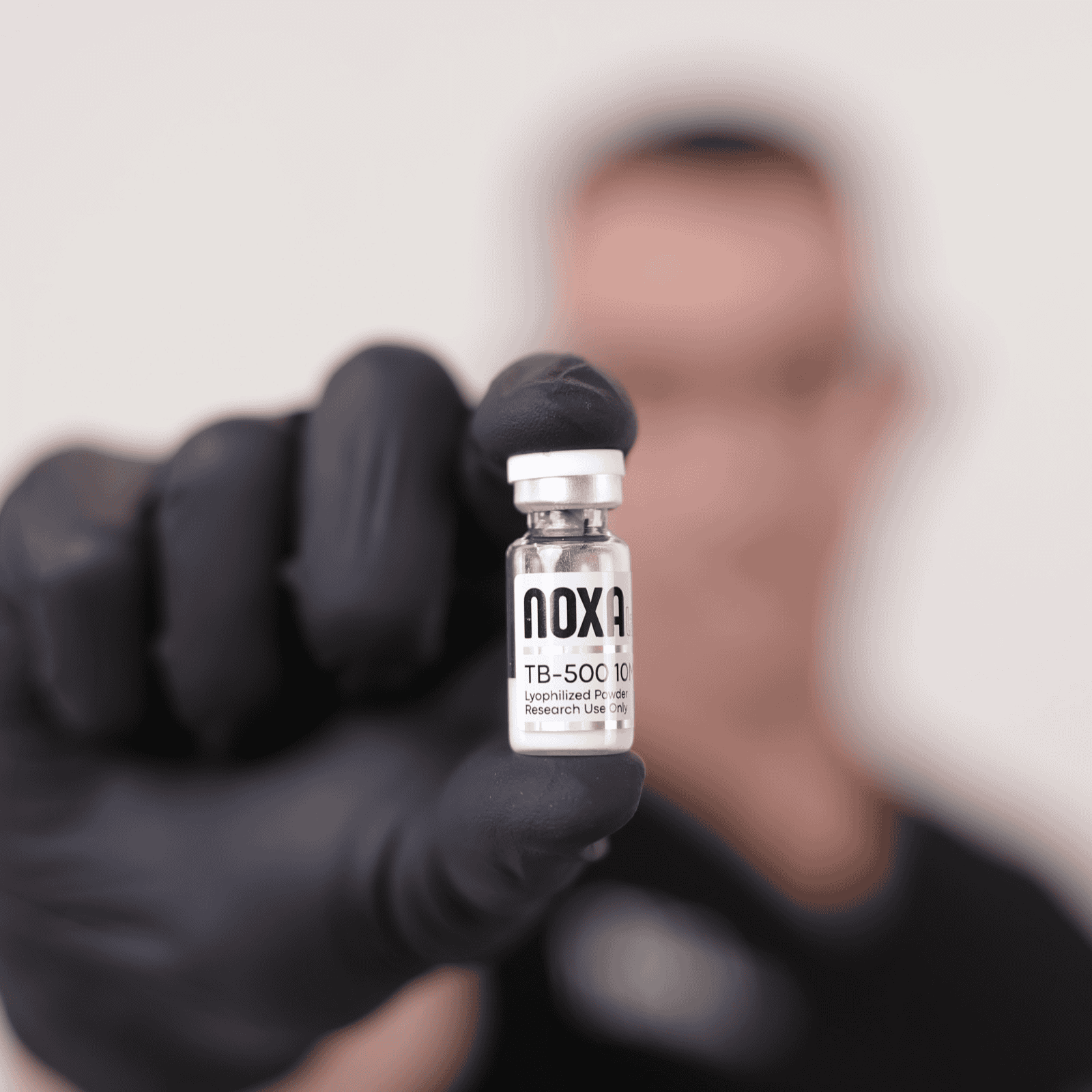
TB-500
$90.00
In stock
Description
Compound Specifications
| Common name | TB-500 |
| Compound class | Synthetic peptide fragment |
| Parent protein | Thymosin beta-4 (Tβ4), 43 amino acids |
| Sequence | Ac-Leu-Lys-Lys-Thr-Glu-Thr-Gln (Ac-LKKTETQ) |
| Amino acid count | 7 |
| N-terminus | Acetylated |
| Molecular weight | 889.0 g/mol |
| CAS number | 77591-33-4 |
| Form | Lyophilized powder |
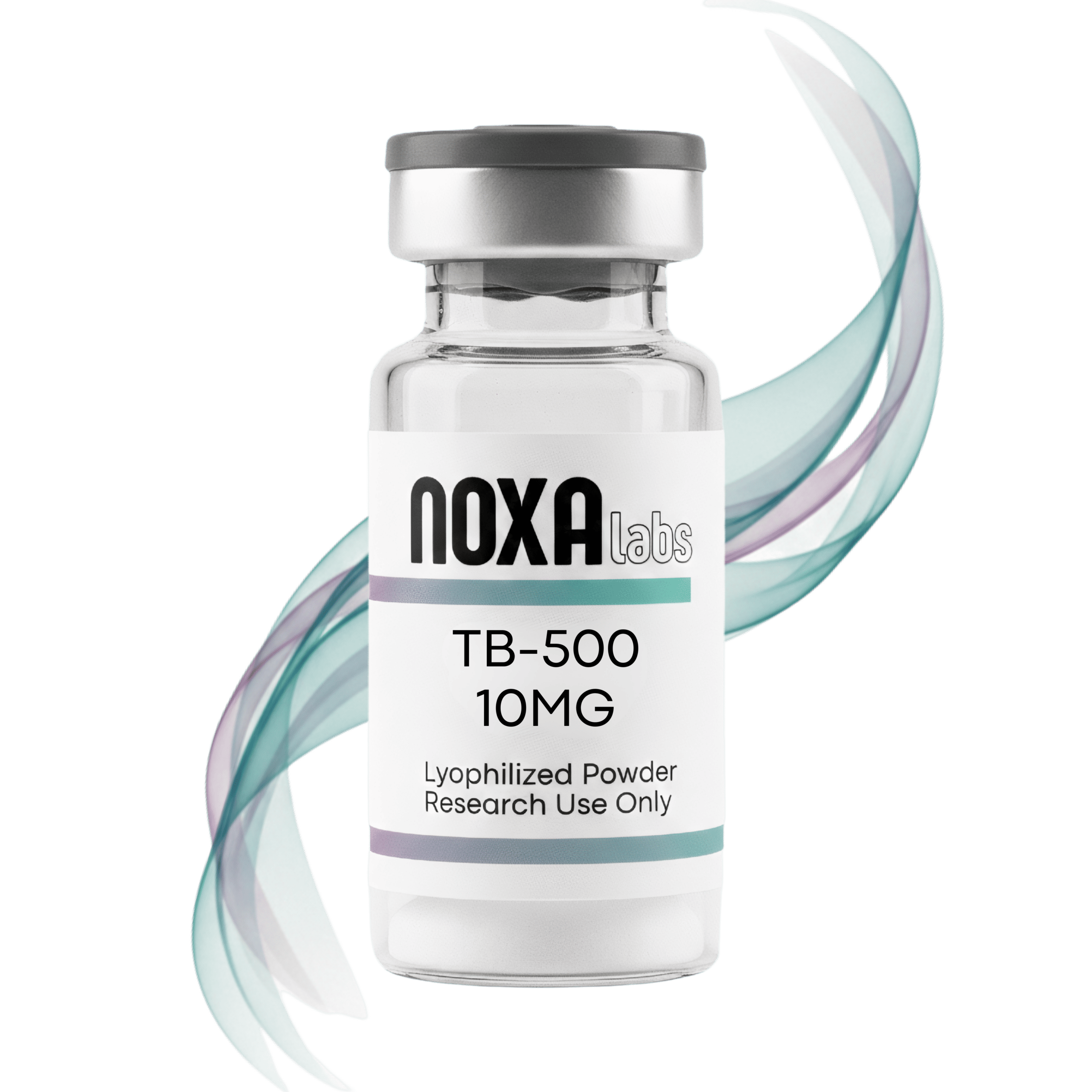
| Quantity | 10mg per vial |
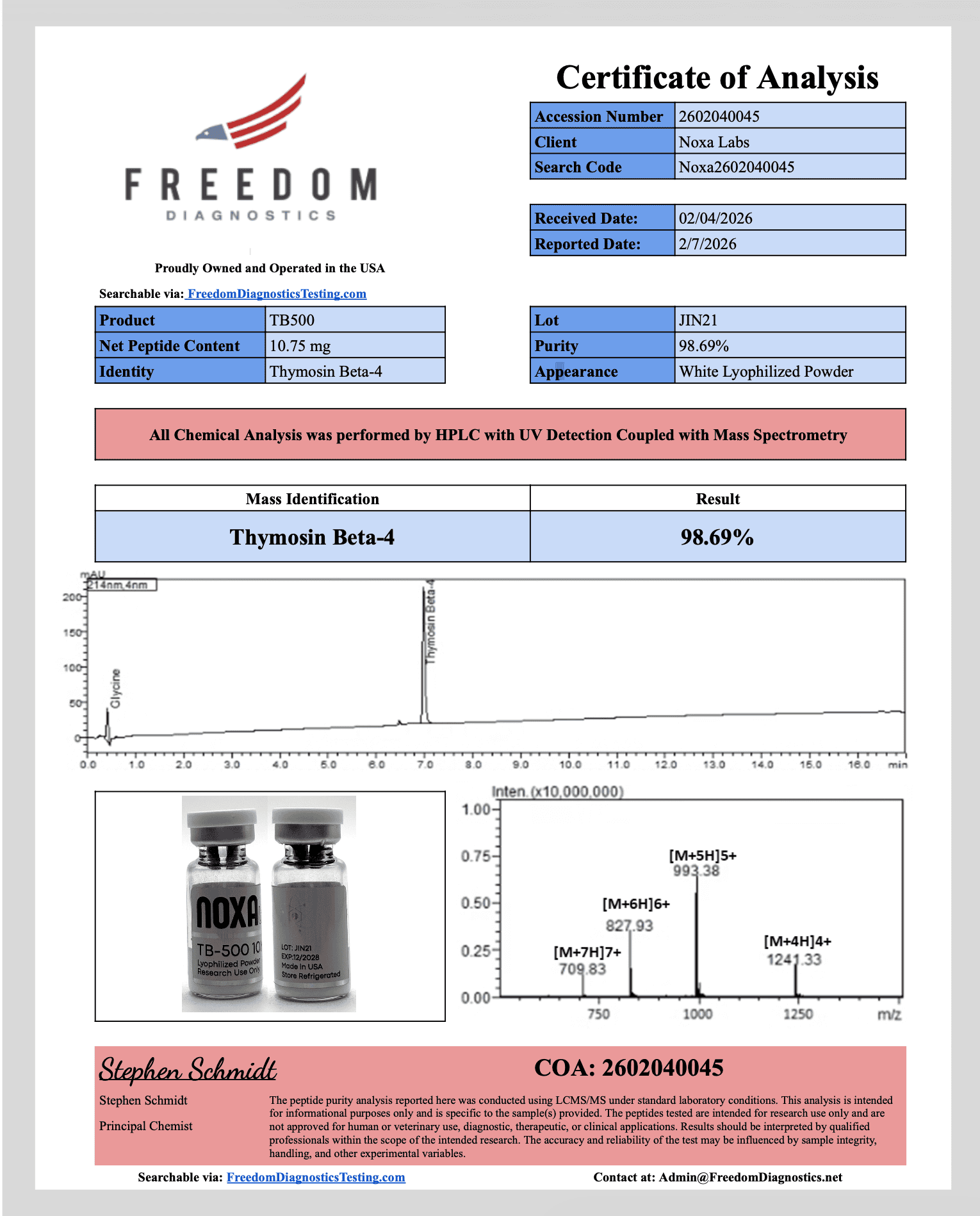
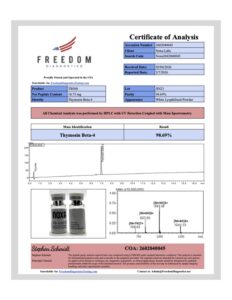
| Purity | ≥99% (HPLC verified) |
| Endotoxin testing | Performed per batch |
| Storage (lyophilized) | 2–8°C, protected from light |
| Storage (reconstituted) | 2–8°C, 30 days |
| Long-term storage | -20°C |
| Third-party testing | Freedom Diagnostics |
| Manufacturing | Arizona GMP facility, USA |
Verify sequence, molecular weight and CAS number against batch COA prior to publication.
Research Background
Thymosin beta-4 is a 43-amino-acid protein found across a wide range of mammalian tissue types and identified in the biochemical literature as one of the most abundant actin-sequestering proteins in cells. Its role in that capacity is well characterized.
TB-500 is not that protein. It is a synthetic seven-amino-acid sequence corresponding to a specific region of it — the actin-binding domain. The N-terminus is acetylated, a modification used across short synthetic sequences to improve stability by removing a free amine that would otherwise present a ready site for enzymatic degradation.
The rationale for working with the fragment rather than the full protein is practical. At seven residues the sequence can be synthesized to high purity and characterized cleanly by HPLC, whereas a 43-residue protein is substantially harder to produce to a consistent standard. That trade-off — a short, cleanly synthesizable fragment standing in for a much larger native protein — is the defining characteristic of this compound and the reason it exists as a distinct research material.
This represents a different structural approach from the full-sequence synthetic peptides elsewhere in our catalog, which are complete sequences in their own right rather than excerpts from larger proteins.
All statements above describe molecular characteristics and published research contexts. Noxa Labs makes no claim regarding safety, efficacy, or outcomes of any kind, in humans or animals.
Handling & Storage
Lyophilized TB-500 is stable at 2–8°C when sealed and shielded from light. For storage beyond several months, -20°C is preferred. Avoid repeated freeze-thaw cycles, which degrade peptide integrity.
For solution preparation, introduce bacteriostatic water slowly down the inner wall of the vial rather than directly onto the powder — direct impact can shear the peptide chain. Swirl gently until fully dissolved. Do not shake or vortex. The resulting solution should be clear, colorless and free of particulates; cloudiness or visible precipitate indicates a handling failure and the vial should be discarded.
Short acetylated sequences dissolve rapidly. Because dissolution is fast, incomplete mixing is easy to overlook — confirm the vial is fully clear before any transfer.
Once in solution, store at 2–8°C and use within 30 days. A 10mg vial reconstituted with 2mL of bacteriostatic water yields a 5mg/mL concentration.
Purity & Testing
Every batch is synthesized at our GMP-compliant Arizona facility and independently analyzed by Freedom Diagnostics before release. We publish HPLC purity data and endotoxin testing results — we don’t ask you to take our word for it. Certificates of Analysis are available for any lot; contact us with your order number.
View all Certificates of Analysis →
Frequently Asked Questions
Is TB-500 the same as thymosin beta-4?
No, and this is the most common point of confusion with this compound. Thymosin beta-4 is a 43-amino-acid protein. TB-500 is a synthetic seven-amino-acid fragment corresponding to its actin-binding region. Some suppliers use the two names interchangeably; they are different molecules with molecular weights differing by roughly 5.5x. Check the Certificate of Analysis on anything you purchase.
What does the “Ac-” in the sequence mean?
The N-terminus is acetylated. In short synthetic peptides this modification improves stability by removing a free amine that would otherwise be a ready target for enzymatic degradation.
How is TB-500 structurally different from BPC-157?
They are unrelated molecules. TB-500 is a 7-residue fragment of a larger native protein. BPC-157 is a complete 15-residue synthetic sequence based on a gastric juice protein. Different origins, different structures, different proposed mechanisms.
Why supply a fragment rather than the full protein?
A seven-residue sequence can be synthesized to high purity and verified by HPLC consistently. A 43-residue protein is considerably harder to produce to the same standard.
How long is reconstituted TB-500 stable?
Refrigerated at 2–8°C, 30 days is the standard handling window. Lyophilized and unopened, stability is considerably longer.
How is it shipped and stored?
Lyophilized peptide is shelf-stable in transit and ships in discreet packaging from Arizona. Refrigerate at 2–8°C on arrival.
Related Research Compounds
- BPC-157 10mg — complete synthetic sequence, structurally unrelated
- BPC-157 + TB-500 Blend 20mg — both compounds pre-combined in a single vial
- GLOW 70mg — three-compound blend including TB-500
- Certificates of Analysis — batch testing data
Research Use Only
For Research Use Only. This product is intended solely for laboratory research purposes. It is not a drug, food, or cosmetic and may not be misbranded, misused, or mislabeled as such. Not for human or veterinary use. Not for diagnostic or therapeutic use. Not for resale without authorization.
You may also like…


Related products
-
 ✓ Verified
KLOW Stack
99% PUREUSA MADE3RD PARTY TESTED$180.00 Add to cart -
✓ Verified
NAD+
99% PUREUSA MADE3RD PARTY TESTED$180.00 Add to cart -
✓ Verified
KPV
99% PUREUSA MADE3RD PARTY TESTED$60.00 Add to cart -
✓ Verified
GHK-Cu
99% PUREUSA MADE3RD PARTY TESTEDFrom $80.00 Select options This product has multiple variants. The options may be chosen on the product page