
BPC-157
FOR NON-CLINICAL LABORATORY RESEARCH USE ONLY
This product is sold exclusively to approved business and institutional purchasers for lawful laboratory research or analytical use. It is not intended for human or animal consumption, ingestion, inhalation, injection, topical application, or other administration.
Read full use restrictions
This product must not be used for medical, therapeutic, diagnostic, prophylactic, clinical, veterinary, compounding, food, animal-feed, dietary-supplement, cosmetic, household, recreational, or personal purposes. It may not be resold or otherwise distributed to individual consumers.
Purchasers must review the product label, Certificate of Analysis, and applicable Safety Data Sheet and maintain appropriately trained personnel, facilities, storage, handling, transportation, and disposal procedures.
From $90.00

Description
Compound Specifications
| Full name | Body Protection Compound-157 |
| Compound class | Synthetic pentadecapeptide |
| Sequence | Gly-Glu-Pro-Pro-Pro-Gly-Lys-Pro-Ala-Asp-Asp-Ala-Gly-Leu-Val |
| Amino acid count | 15 |
| Molecular formula | C₆₂H₉₈N₁₆O₂₂ |
| Molecular weight | 1419.53 g/mol |
| CAS number | 137525-51-0 |
| Disulfide bridges | None — no cysteine residues present |
| Form | Lyophilized powder |
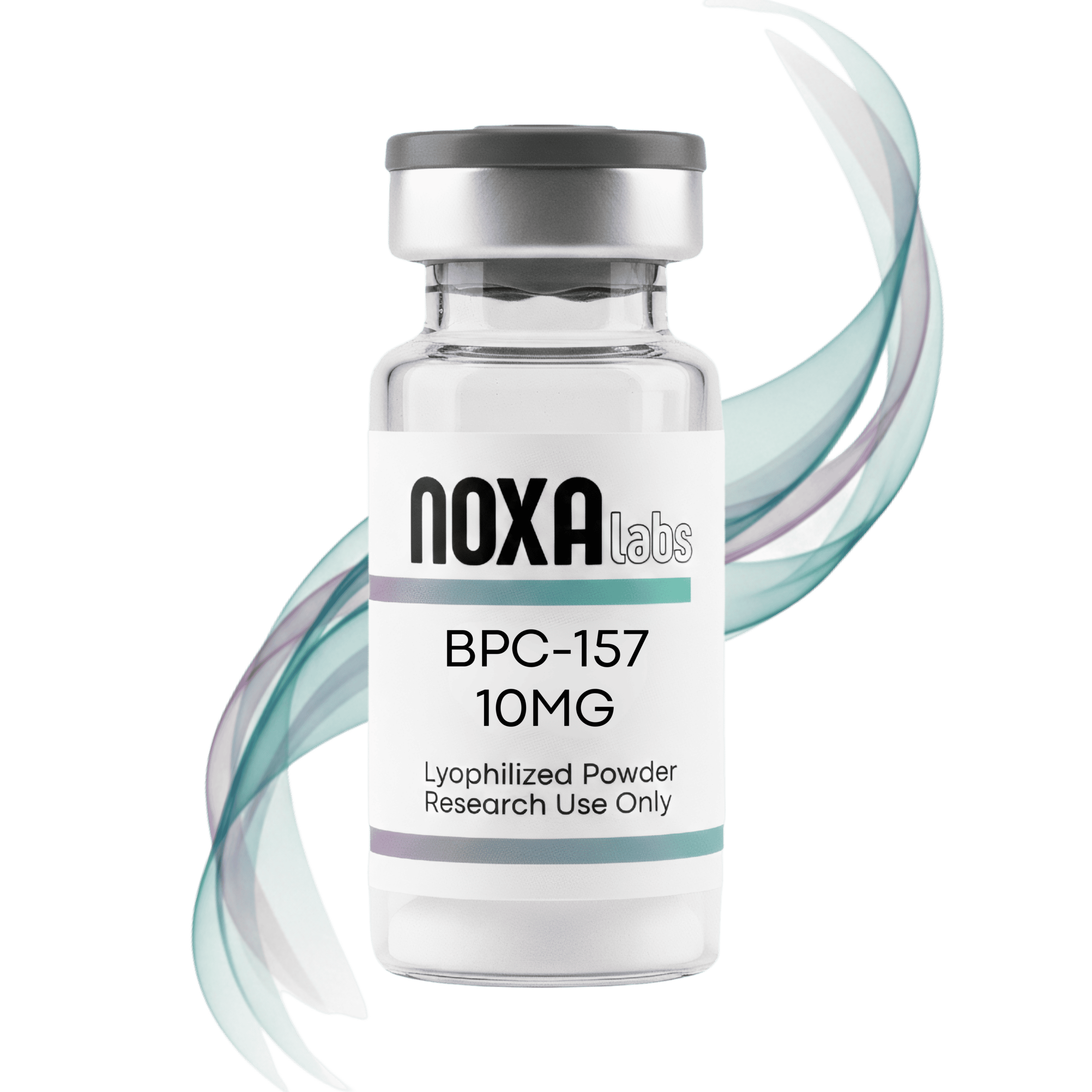
| Quantity | 10mg per vial |
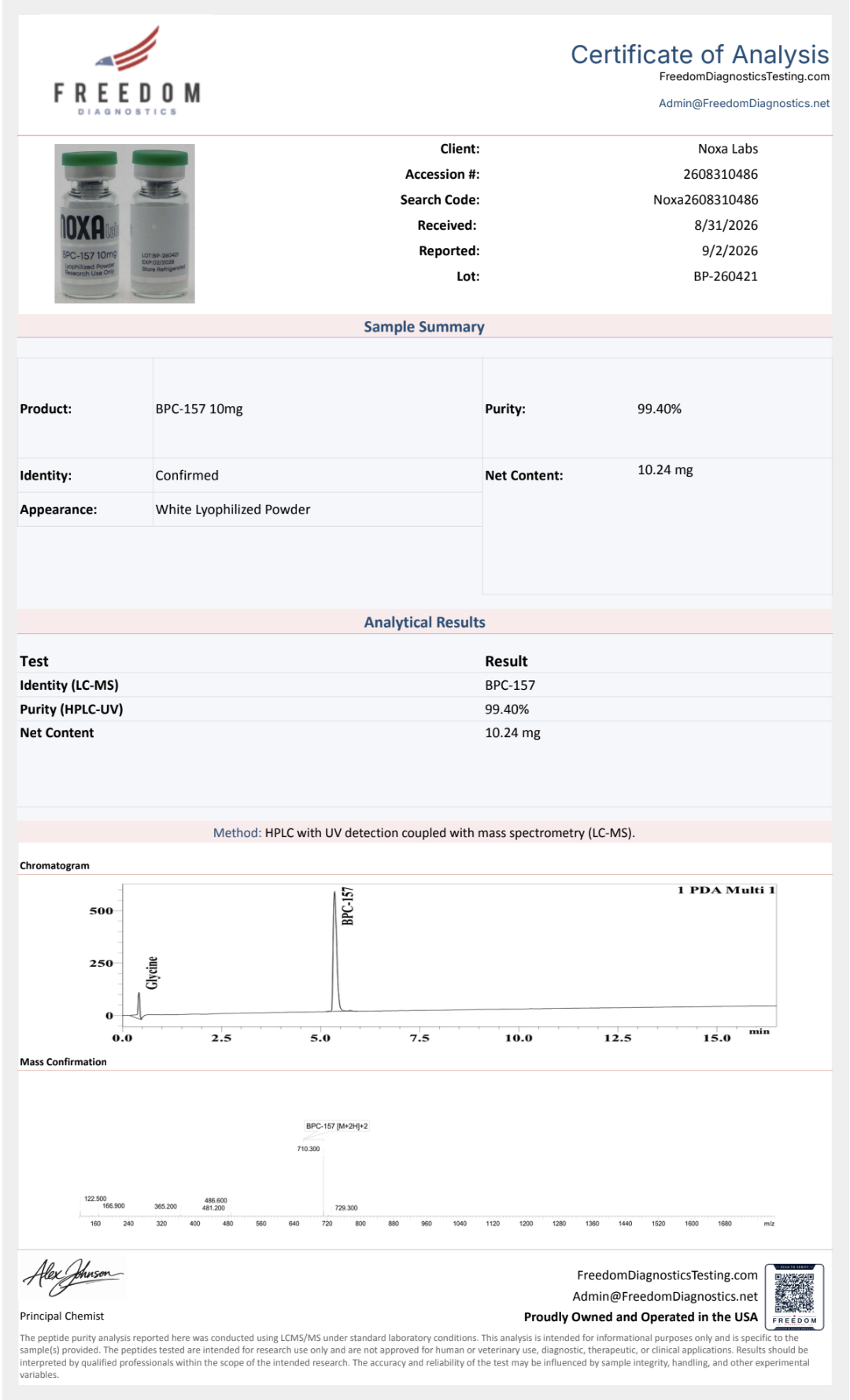
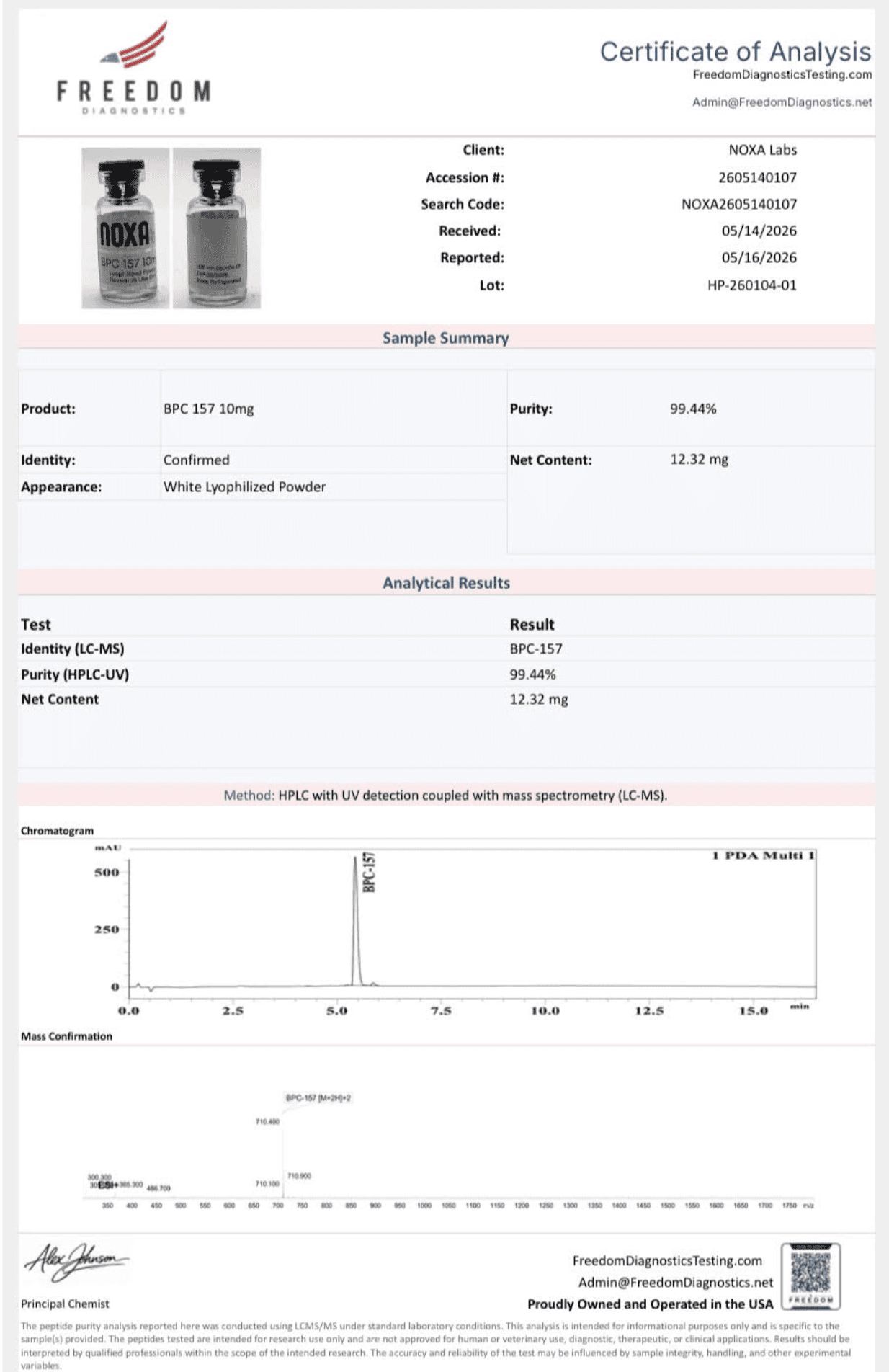
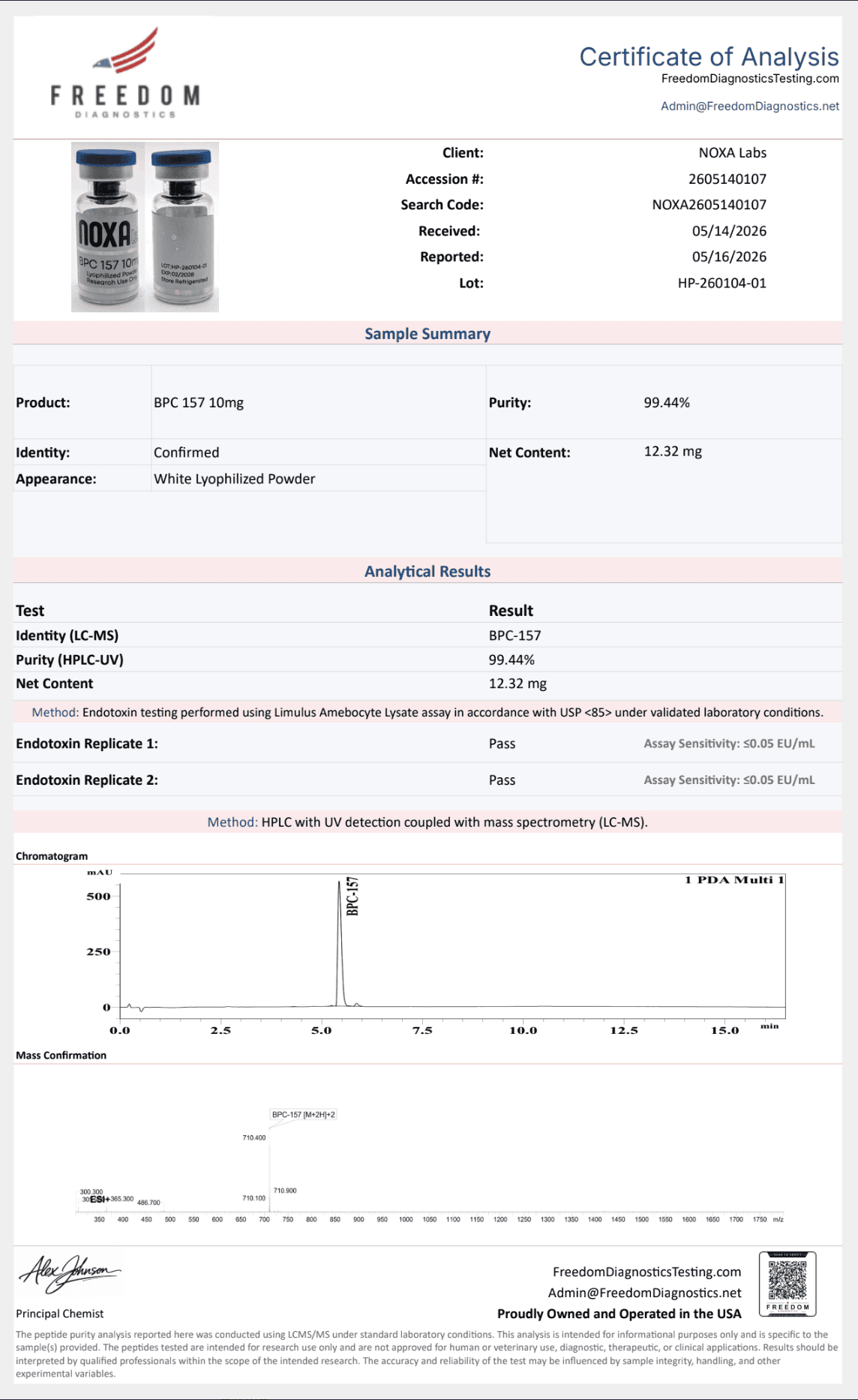
| Purity | ≥99% (HPLC verified) |
| Storage (lyophilized) | 2–8°C, protected from light |
| Third-party testing | Freedom Diagnostics |
| Manufacturing | Arizona GMP facility, USA |
Research Background
BPC-157 is a stable gastric pentadecapeptide sequence derived from a partial sequence of a protective protein identified in human gastric juice. The compound supplied by Noxa Labs is synthesized, not extracted from biological material.
Its defining structural characteristic is stability in acidic conditions. Most peptides of comparable length degrade rapidly in gastric acid, which is the limiting variable in oral-administration research models. BPC-157 does not, and that property is the reason it appears in a body of literature that would be impractical to generate with a less stable sequence.
The 15-amino-acid chain contains no cysteine residues and therefore forms no disulfide bridges. This distinguishes its folding behavior, stability profile and handling requirements from cyclized peptides and from fragments of larger native proteins such as TB-500.
Published preclinical work — a substantial portion of it from research groups led by Sikiric and colleagues — has examined the compound principally in the context of angiogenic signaling, with attention to VEGFR2 expression and interaction with the nitric oxide system. These are laboratory research contexts. No conclusions regarding outcomes in humans are drawn or implied.
Handling & Storage
Lyophilized BPC-157 is stable at 2–8°C when sealed and shielded from light. For storage beyond several months, -20°C is preferred. Avoid repeated freeze-thaw cycles, which degrade peptide integrity.
Purity & Testing
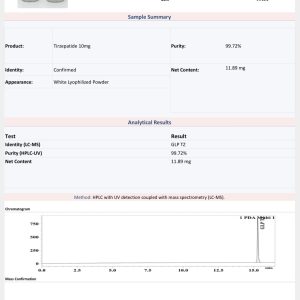
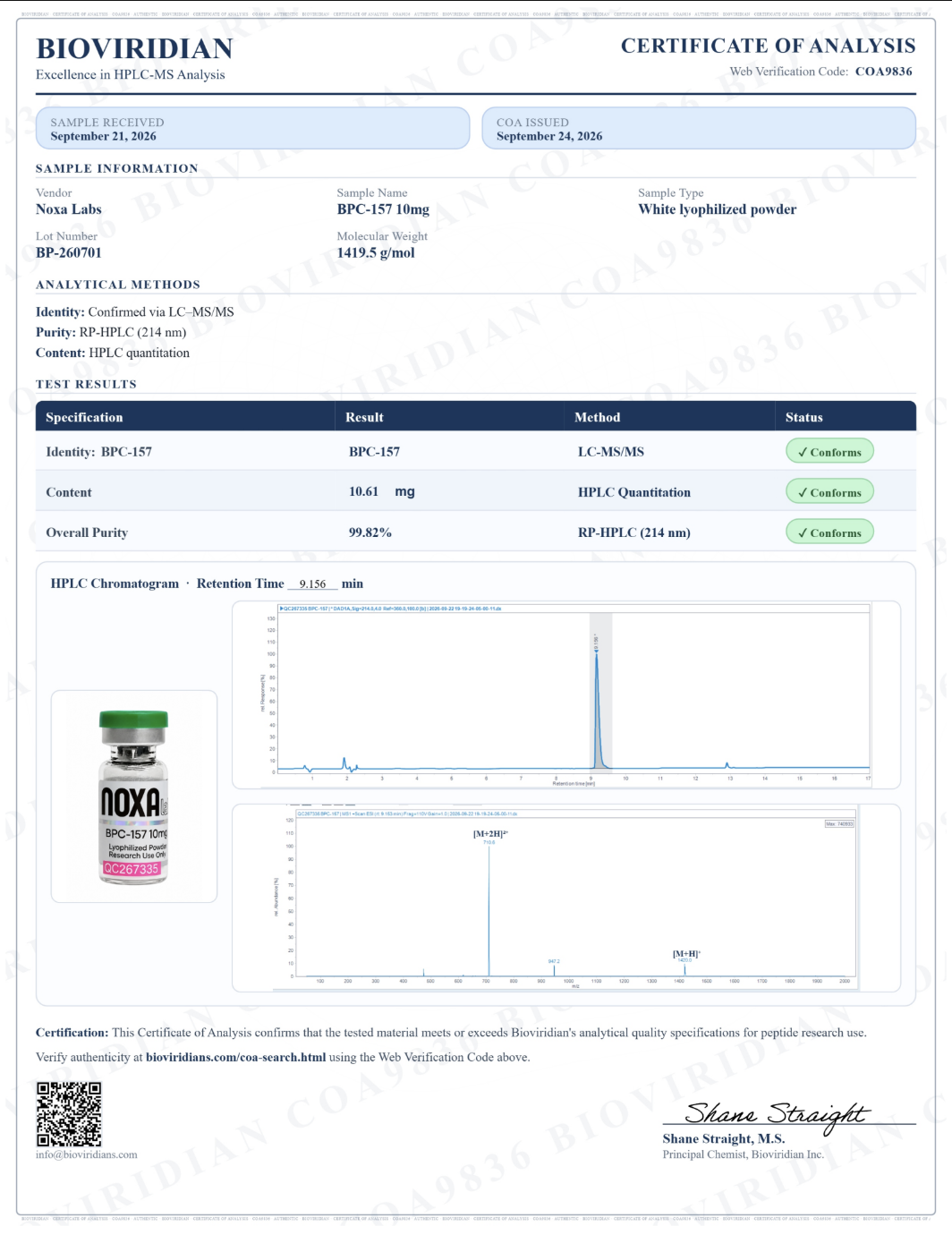
Every batch is synthesized at our GMP-compliant Arizona facility and independently analyzed by Freedom Diagnostics before release. We publish HPLC purity data and endotoxin testing results — we don’t ask you to take our word for it. Certificates of Analysis are available for any lot; contact us with your order number.
View all Certificates of Analysis →
Frequently Asked Questions
What is BPC-157 derived from?
It is a synthetic 15-amino-acid sequence based on a partial sequence of Body Protection Compound, a protein identified in human gastric juice. Noxa Labs BPC-157 is synthesized, not extracted.
How is BPC-157 structurally different from TB-500?
They are unrelated molecules. BPC-157 is a complete 15-amino-acid synthetic sequence. TB-500 is a fragment corresponding to the actin-binding region of thymosin beta-4, a 43-amino-acid protein. Different origins, different structures, different proposed mechanisms.
Why does the absence of cysteine matter?
No cysteine means no disulfide bridges. The peptide does not rely on internal bonds to hold a folded conformation, which gives it a different stability and handling profile from cyclized peptides.
Does BPC-157 require refrigeration during shipping?
No. Lyophilized peptide is shelf-stable in transit and ships from Arizona. Refrigerate on arrival.
What size is available?
10mg lyophilized vials.
Related Research Compounds
- TB-500 10mg — thymosin beta-4 fragment, a structurally unrelated compound
- BPC-157 + TB-500 Blend 20mg — both compounds pre-combined in a single vial
- GLOW 70mg — three-compound blend including BPC-157
- Certificates of Analysis — batch testing data
Research Use Only
For Research Use Only. This product is intended solely for laboratory research purposes. It is not a drug, food, or cosmetic and may not be misbranded, misused, or mislabeled as such. Not for human or veterinary use. Not for diagnostic or therapeutic use. Not for resale without authorization.
Additional information
| Size | 10mg, 20mg |
|---|
You may also like…
-

BPC-157 + TB-500 Blend
From $100.00 Select options This product has multiple variants. The options may be chosen on the product page


Related products
-
KLOW Stack
$150.00 Add to cart -
CJC-1295 + Ipamorelin Blend
$100.00 Add to cart -

GLP-TIRZ
From $150.00 Select options This product has multiple variants. The options may be chosen on the product page -
Tesamorelin
From $100.00 Select options This product has multiple variants. The options may be chosen on the product page